The Teak Furniture Buyer's Guide: Credenzas, Tables, and Sideboards
Danish teak is the most buyer-ready category in MCM collecting. Here's how to identify quality, avoid refinishing damage, and where to find it in the US.
Posted on:
Apr 15, 2026
8 min read
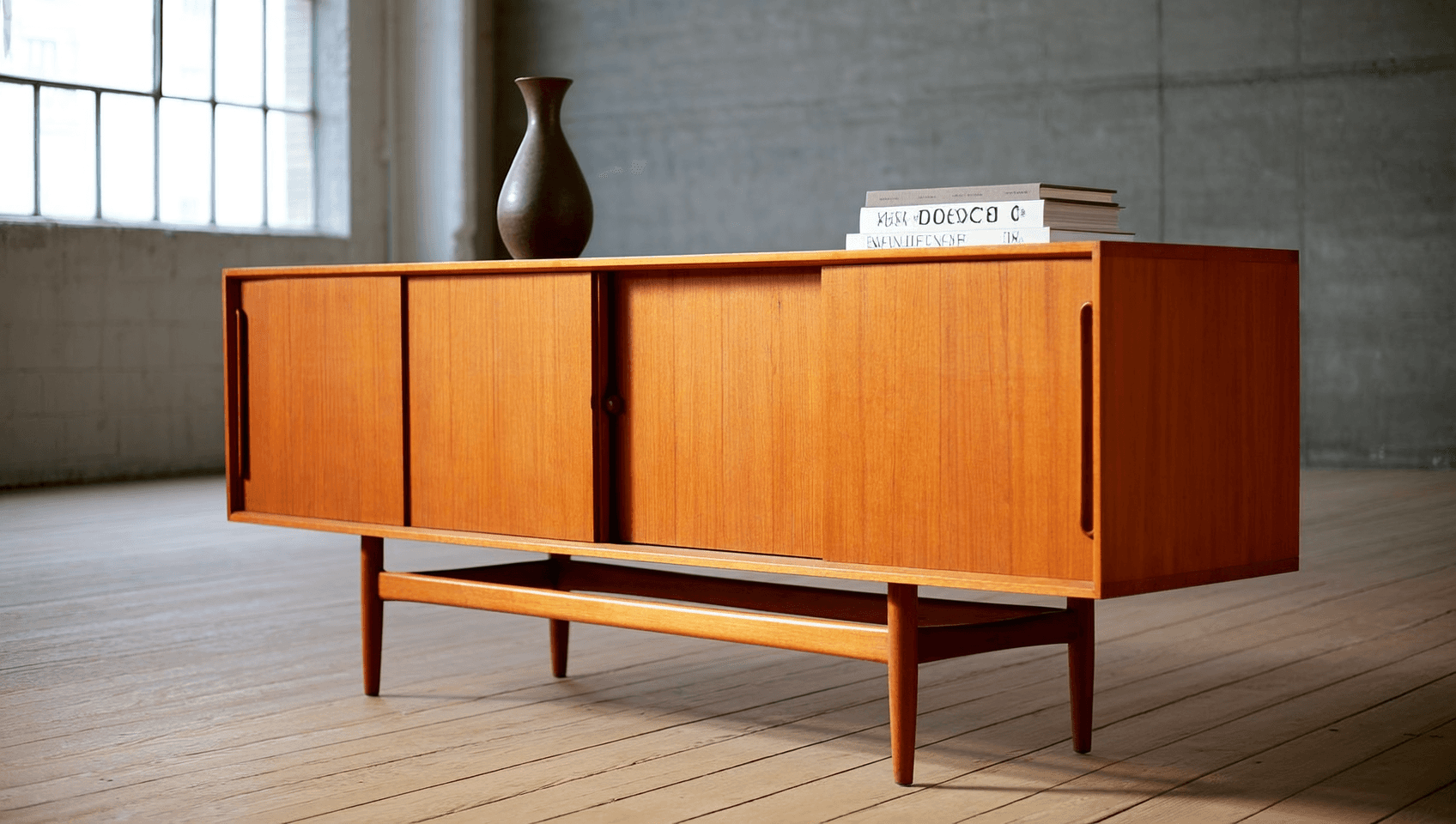
If you're building an MCM home, teak furniture is where most of your money and most of your daily use will land. Credenzas, dining tables, and sideboards from 1950s–1970s Denmark are still abundant, still repairable, and still dramatically undervalued relative to the design work that went into them. Here's how to buy well.
Why Danish teak
Post-war Denmark had two things in abundance: skilled cabinetmakers and imported Burmese teak. The result was a 20-year run of mass-produced furniture built to cabinetmaking standards — dovetailed drawers, finger-jointed cases, hand-finished edges — at factory prices. That combination is what collectors chase today.
The four categories worth knowing
Credenzas and sideboards. The workhorse. Look for Arne Vodder (Sibast), H.P. Hansen, and Kai Kristiansen. Tambour doors are a bonus, not a requirement.
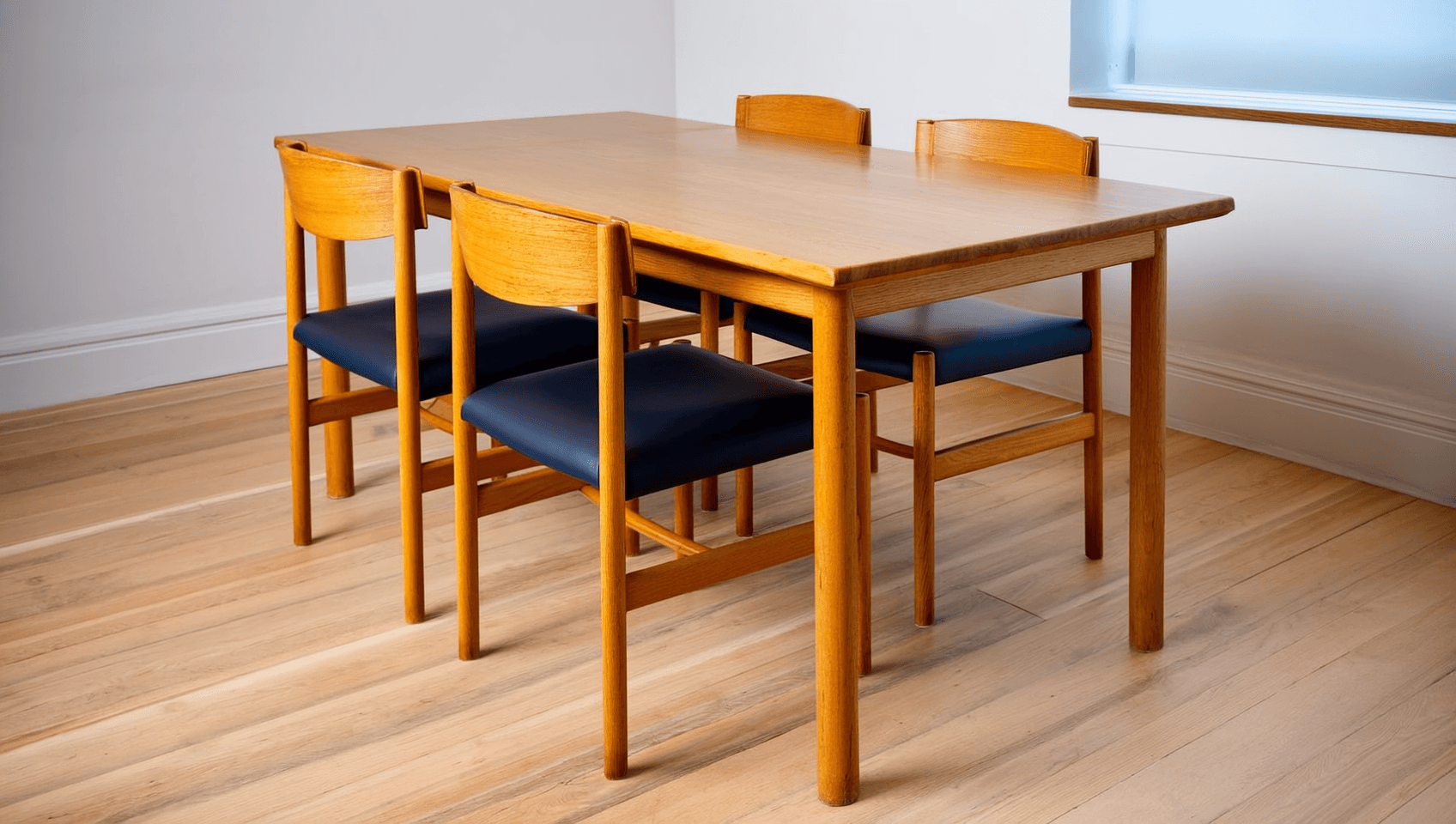
Dining tables. Draw-leaf extending tables from the 1960s are the buy. Niels Otto Møller, Hans Olsen, and Erik Buch dominated this category.
Dining chairs. Møller Model 77 and 78, Johannes Andersen, Kofod-Larsen. Often sold as sets of 4 or 6; single chairs price at a steep discount.
Shelving. Kai Kristiansen's FM shelving, Poul Cadovius's Royal System, and the ubiquitous "Cadovius-style" wall units. Modular, reconfigurable, and still affordable.
How to spot quality
Joinery. Open every drawer. Dovetails = good. Staples or glue alone = skip.
Veneer vs. solid. Most carcass work is teak veneer over a hardwood core — this is normal and not a flaw. Edges, legs, and structural members should be solid teak.
Maker's marks. Branded stamps, metal plates, or paper labels on the back of the piece or inside a drawer. "Danish Control" and "Made in Denmark" stamps are common and real.
Finish. Original oil finish is ideal. Aggressive refinishing — especially heavy sanding and polyurethane topcoats — can cut 30–50% off value.
Red flags
Veneer bubbling or lifting (humidity damage)
Drawer bottoms replaced with plywood instead of the original solid boards
Brass or aluminum legs replaced with tapered wood legs (or vice versa)
"Teak" that is actually afromosia, iroko, or rubberwood — the color and grain are different
Care
Re-oil twice a year with Danish oil or a teak-specific oil. Don't use furniture polish or wax. Don't place hot items directly on the surface — use trivets. Keep away from direct radiator heat, which opens the grain.
Where to buy in the US
Danish Concepts International — San Francisco
Fuchs Furniture — Boston
Teak New York — Brooklyn
Mid Century Mobler — San Francisco
Humboldt House — Chicago
Or browse our full directory of 232 MCM stores with filters for Danish Modern specialties.
Related guides
Scandinavian Designers to Know
MCM Under $1,000